











.jpg?la=en&h=320&w=720&hash=244C75B74F0F77521D56164450973BCD)











.jpg?la=en&h=310&w=720&hash=8D9823F26AA80B2B75C3E4B2E61770DC)


.jpg?la=en&h=320&w=719&hash=13CA7E4AA3E453809B6726B561F2F4DD)
.jpg?la=en&h=306&w=720&hash=F21A7CD3C49EFBF4D41F00691D09AEAC)

.png?la=en&h=320&w=720&hash=18CFCCD916C92D922F600511FABD775D)









Highlights
- As buildings, systems and portfolios become more connected, leaders are gaining a clearer understanding of the true impact of downtime across a wider range of facility types
- Expectations for uptime, performance and reliability are rising – and shaping how organizations manage buildings not traditionally considered mission-critical
- Organizations are applying the principles behind mission-critical operations – visibility, proactive maintenance and environmental control – to improve performance and reduce risk
In mission-critical environments – hospitals, pharmaceutical labs and semiconductor fabs, for instance – equipment downtime is not an option. As organizations outside these traditional “life-or-death” sectors become more connected, and as facility performance becomes more closely tied to business outcomes, the consequences of operational disruption are becoming clearer.
For that reason, many facilities across diverse industries are taking advantage of the same AI-powered smart building and workplace management platforms – like OpenBlue – to maintain precise environmental conditions, address equipment issues before they escalate and ensure continuous oversight of critical building systems.
Here's how organizations are applying mission-critical approaches to other types of facilities and focusing on environmental performance, proactive maintenance and real-time operational visibility.
Maintaining environmental conditions as a performance driver
In traditional mission-critical environments, maintaining precise environmental conditions is essential. Temperature, humidity and air quality must be tightly controlled to protect patients, ensure research integrity or support sensitive manufacturing processes.
Similarly, environmental conditions in spaces that aren’t traditionally considered mission-critical – such as classrooms and offices – directly influence employee health, cognitive performance and overall experience. Poor or inconsistent indoor air quality (IAQ) can lead to reduced productivity, increased absenteeism and lower engagement – outcomes that carry real consequences.
As awareness of these impacts grows, organizations are moving beyond basic HVAC management toward connected, data-driven building performance optimization. For example, OpenBlue Insights enables facilities teams to monitor indoor air quality, analyze environmental and sensor data and optimize building conditions in real time. These insights can inform decisions that balance occupant comfort, health and energy performance.
Regardless of industry, how facilities teams manage environmental conditions can have a significant impact on occupants, organizational performance and progress toward long-term business goals.
How OpenBlue creates more productive workplaces
Catching and addressing equipment issues before they escalate
In mission-critical facilities, equipment failure is not just an inconvenience – it’s a risk that must be actively managed. That’s why these environments rely on continuous monitoring and proactive maintenance strategies to identify issues before they lead to disruption.
Today, that same approach is gaining traction in other types of facilities.
As e-commerce and supply chain expectations continue to push warehouses and manufacturing facilities toward 24/7 operations, the business impact of equipment downtime grows. The old approach to facility and systems maintenance – relying on reactive models and addressing issues only after they occur – is no longer sustainable.
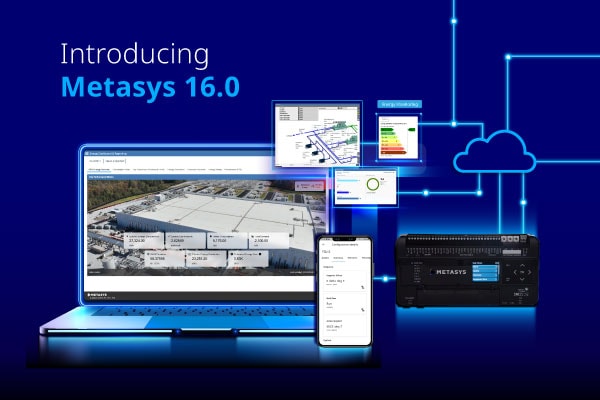
By leveraging connected sensors, meters and advanced analytics, OpenBlue enables a shift toward proactive maintenance powered by predictive analytics. Integration with the Metasys building automation system allows OpenBlue solutions to provide deep visibility into system performance and empower facilities teams to detect anomalies early. This can help prioritize maintenance more effectively and reduce the likelihood of unexpected failures.
Whether the building sits on a hospital, college or corporate office campus, how facilities teams maintain equipment can determine whether operations continue uninterrupted or are brought to a disruptive and costly halt by unexpected failures.
Ensuring continuous visibility across building systems
Continuous, centralized visibility is essential to delivering the uptime and reliability required in mission-critical environments. Operators need to understand exactly what is happening across systems at any given moment and be able to act quickly when conditions change.
As building systems become more complex and interconnected, this level of visibility is becoming more important across all types of facilities. Without a unified view, facilities teams can be left managing disparate systems in silos. This can make it difficult to identify and troubleshoot issues, understand root causes or optimize performance across facilities and portfolios.
OpenBlue Equipment Performance addresses this challenge by bringing together data from across building systems into a single integrated platform view. It applies advanced fault detection and diagnostics (FDD) to analyze data from connected equipment and sensors, identify potential issues early and alert teams before they escalate into failures. By revealing actionable insights and prioritizing maintenance needs, it helps organizations optimize equipment performance, reduce downtime and make more informed operational decisions at both building and portfolio levels.
From chip fabs to retail warehouses, maintaining continuous visibility into building systems is critical to understanding conditions in real time and ensuring operations stay on track.
From specialized standard to everyday expectation
Facilities teams in the healthcare, pharmaceutical and semiconductor industries have embraced OpenBlue solutions like Operating Room Optimization to help them maintain strict environmental conditions, ensure continuous uptime and enable real-time visibility across critical systems.
As organizations in other sectors recognize the link between facility performance and business outcomes, many are turning to these same types of advanced technologies to realize similar benefits.
A disruption in a corporate office may not halt a surgical procedure, but it can compromise security and access control systems, degrade IAQ, impact employee productivity or even force a temporary closure.
Organizations can no longer afford to treat operational performance as an afterthought.
Instead, they’re adopting the tools, technologies and strategies that have long supported mission-critical environments. They’re now applying them in new ways to improve reliability, enhance experience and turn facilities from cost centers into contributors to business growth.
Optimize performance and deliver better business outcomes – without compromising uptime
Frequently asked questions
What does it mean for a building to be mission-critical?
A mission-critical building is any facility where downtime, poor performance or system failure can significantly disrupt business operations, occupant safety, productivity or customer experience. Today, that definition extends beyond hospitals and labs to include offices, warehouses, campuses and other buildings that support essential daily operations.
Why are more organizations managing buildings with mission-critical standards?
More organizations are taking this approach because connected building systems make it easier to see how downtime affects revenue, compliance, employee experience and business continuity. As expectations for uptime and operational resilience rise, facilities that were once considered noncritical are now being managed with greater urgency and precision.
How can smart building platforms help reduce downtime and improve performance?
Smart building platforms help reduce downtime by connecting building data, equipment performance insights and environmental monitoring in one place. This gives facilities teams real-time visibility, supports proactive maintenance and helps them optimize indoor conditions, energy use and overall building performance before issues escalate.