
















.jpg?la=en&h=320&w=720&hash=244C75B74F0F77521D56164450973BCD)














.jpg?la=en&h=310&w=720&hash=8D9823F26AA80B2B75C3E4B2E61770DC)


.jpg?la=en&h=320&w=719&hash=13CA7E4AA3E453809B6726B561F2F4DD)
.jpg?la=en&h=306&w=720&hash=F21A7CD3C49EFBF4D41F00691D09AEAC)

.png?la=en&h=320&w=720&hash=18CFCCD916C92D922F600511FABD775D)











Highlights
- Open building automation systems help organizations avoid vendor lock-in while improving flexibility, interoperability and scalability.
- Open protocols and APIs create the connected data foundation needed for AI, analytics, decarbonization initiatives and enterprise visibility.
- Modern open platforms combine interoperability with robust cybersecurity to strengthen resilience without limiting future technology choices.
What Is an Open Building Automation System?
An open building automation system (BAS) is a platform that uses industry-standard protocols, accessible data and interoperable technologies to connect building systems from multiple manufacturers. Unlike closed systems that can limit integrations and future upgrades, a open BAS gives organizations the flexibility to choose equipment, service providers and software solutions that best support their operational goals.
As building owners face increasing pressure to improve efficiency, strengthen cybersecurity, advance sustainability initiatives and prepare for AI-driven operations, openness has become a strategic advantage. A open BAS helps organizations avoid vendor lock-in, maximize existing investments and adapt to changing business needs without costly rip-and-replace upgrades.
At Johnson Controls, openness is reflected through open protocols, open access, open APIs and open procurement. Together, these capabilities support a more connected, scalable and future-ready building strategy.
Five reasons why a open BAS is essential for future-proofing your buildings:
1. Open protocols create a more connected building ecosystem
Open protocols provide the common language that allows HVAC, lighting, fire, security, metering and other building systems to communicate, regardless of manufacturer.
This interoperability helps organizations consolidate data, streamline integrations and support future expansion without being constrained by proprietary technologies. Instead of managing isolated building systems, owners can create a unified building management environment that improves visibility and operational performance.
Open protocols also establish the data foundation required for emerging technologies such as artificial intelligence, machine learning and advanced analytics. As buildings become more connected, organizations can use this data to identify optimization opportunities, improve efficiency and support decarbonization goals.
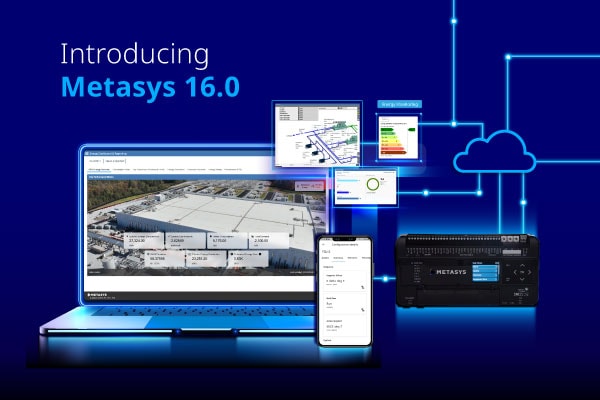
Metasys supports a broad range of industry-standard protocols and interfaces to help organizations build a more connected ecosystem. The latest platform enhancements support up to 1,300 IP devices and 65,000 objects per server, helping organizations scale as operational requirements grow.
2. Open access gives facility teams greater control
Building operations are constantly changing. Occupancy patterns shift, spaces are reconfigured and new operational priorities emerge.
Open access allows authorized facility teams to make operational updates without relying on proprietary tools or vendor intervention. Teams can configure dashboards, update space information, create interlocks and adjust workflows based on current needs.
This flexibility helps organizations respond faster to changing conditions while reducing administrative complexity.
Metasys supports this approach with configuration tools designed to simplify system management. Common programming and setup tasks can be completed significantly faster, allowing teams to make changes while systems remain online and operational.
3. Open APIs unlock the full value of building data
Open application programming interfaces (APIs) help organizations connect building data with analytics tools, business software and future digital technologies. This enables deeper visibility across operations and supports more informed decision-making.
Under the Building for a future that is constantly changing header, the first paragraph should be replaced with this:
Future-ready buildings need more than compatible protocols. They need an open system that makes it easy to connect technologies, use data and adapt as needs change.
4. Open procurement supports long-term flexibility and investment protection
Technology decisions made today can impact building performance for decades.
Open procurement gives organizations the freedom to select equipment, software and service providers based on performance, expertise and value rather than being restricted to a single vendor ecosystem. This approach encourages competitive pricing while providing more options for system expansion and modernization.
For many organizations, investment protection is one of the most important benefits of openness. As buildings evolve, owners can incorporate new technologies, expand facilities and modernize infrastructure without replacing functioning systems.
An open, modern system helps organizations remain flexible, stay within budget and maintain greater control over future decisions.
5. Open systems strengthen cybersecurity and future readiness
Some organizations have traditionally viewed openness and cybersecurity as competing priorities. In reality, modern BAS platforms support both.
Today's leading building automation platforms combine open architectures with encrypted communications, role-based access controls, zero-trust principles and support for evolving cybersecurity standards.
This enables organizations to integrate technologies, share data and support interoperability while maintaining a strong security posture.
Metasys combines openness with a defense-in-depth cybersecurity approach, helping organizations strengthen resilience as operational technologies become increasingly connected.
As AI adoption grows and enterprise systems become more integrated, organizations need building automation platforms that can adapt without compromising security. A open BAS creates the flexibility required to embrace future technologies while supporting long-term cyber resilience.
Building for a future that is constantly changing
Future-ready buildings need more than compatible protocols. They need an open system that makes it easy to connect technologies, use data and adapt as needs change.
Whether managing hospitals, data centers, campuses, manufacturing facilities or commercial offices, building owners need technology that can evolve alongside changing business objectives.
By combining open protocols, open access, open APIs, open procurement and cybersecurity-focused design, organizations can create a stronger foundation for innovation while maximizing the value of existing investments.
Metasys supports this open approach with capabilities designed to help organizations connect systems, simplify integrations and prepare for the next generation of building intelligence.
See the dimensions of BAS openness
FAQs
What is an open building automation system?
A open BAS uses industry-standard protocols and interfaces that allow equipment, software and services from multiple providers to work together.
Why is openness important for AI and analytics?
AI and analytics depend on data accessibility. Open protocols and APIs make it easier to connect, share and analyze building data.
Does a open BAS compromise cybersecurity?
No. Most modern open BAS platforms combine interoperability with cybersecurity measures such as encryption, role-based access and zero-trust principles.
How does openness protect long-term investments?
Open systems make future upgrades, integrations and service options easier. This can help organizations adapt as requirements change.