













.jpg?la=en&h=320&w=720&hash=244C75B74F0F77521D56164450973BCD)










.jpg?la=en&h=310&w=720&hash=8D9823F26AA80B2B75C3E4B2E61770DC)


.jpg?la=en&h=320&w=719&hash=13CA7E4AA3E453809B6726B561F2F4DD)
.jpg?la=en&h=306&w=720&hash=F21A7CD3C49EFBF4D41F00691D09AEAC)

.png?la=en&h=320&w=720&hash=18CFCCD916C92D922F600511FABD775D)




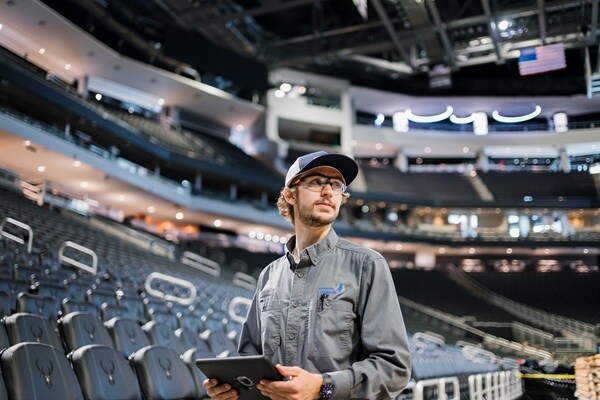





Facility leaders in higher education are facing new challenges, from cost-cutting measures to AI adoption to evolving return-to-office policies. To uncover these challenges and more, Johnson Controls partnered with an independent market research firm to conduct a survey of U.S. business leaders in HR, finance, facilities and real estate.
The 2025 Inside the Workplace Report for Higher Education reveals actionable trends that help drive efficiency, sustainability and occupant well-being for higher education institutions. Discover some of the top insights shaping campus operations this year and download the full report for access to even more takeaways.
Are universities using generative AI, automation, and machine learning?
Higher education institutions are increasingly embracing cutting-edge technologies like generative artificial intelligence (GenAI), automation and machine learning (ML) to enhance operational efficiency. These innovations are transforming campus management by enabling autonomous building operations and predictive maintenance .
Automation is streamlining processes such as adjusting lighting and air conditioning based on occupancy, which not only enhances comfort but also contributes to sustainability goals. The report highlights that 63% of university leaders plan to implement GenAI to assist with the operations and maintenance of workplaces over the next year, up from 58% a year ago.
How do universities collect data on their work models?
With a broader push for increased efficiency and reduced overhead, organizations are doing away with location-specific work models. Most university leader respondents said their university follows a work model that is consistent across all sites.
These institutions are increasingly leveraging technology to streamline work model tracking and enhance performance metrics. The adoption of advanced digital solutions has led to a significant shift away from manual tracking methods, with only 4% of respondents now relying on manual systems compared to 45% last year.
Unlock the full report for even more insights & strategies
Are universities setting sustainability goals?
The report highlights the increasing importance of sustainability in higher education. Two-thirds of university leaders said sustainability is a higher priority than it was a year ago, marking a 17% increase from last year. The built environment is a major contributor to greenhouse gas emissions and it is now seen as crucial in combating climate change.
Universities are setting sustainability goals, with 48% of leaders confirming their institutions have established such targets, up from 45% last year. Encouragingly, 92% of these organizations are on track to achieve their goals.
This change aligns with employee values, as 75% of respondents believe it's crucial for their institutions to commit to sustainability. The integration of smart building technologies and workplace management tools is accelerating efforts to reduce environmental impact, making sustainability a central business priority.
Frequently asked questions about the higher education workplaces
How are universities using AI?
When asked about the technology they plan to implement to assist with the operations and maintenance of workplaces, 63% of higher education respondents said generative AI. Automation was the second most popular response at 33%, followed by machine learning at 29%.
Do universities have hybrid work models?
The survey shows that employees are spending more time in the office. In 2025, 59% of employees were in the office five days a week, up from 40% the year before. Only 8% of institutions allow employees to come in less than three days a week.
Are universities tracking indoor air quality?
As organizations leverage technology to collect more information about their buildings, 22% of higher education respondents indicated that indoor air quality (IAQ) is an area where they want more data. Monitoring and improving IAQ can improve space utilization, employee productivity, energy efficiency and occupant well-being.