
















.jpg?la=en&h=320&w=720&hash=244C75B74F0F77521D56164450973BCD)














.jpg?la=en&h=310&w=720&hash=8D9823F26AA80B2B75C3E4B2E61770DC)


.jpg?la=en&h=320&w=719&hash=13CA7E4AA3E453809B6726B561F2F4DD)
.jpg?la=en&h=306&w=720&hash=F21A7CD3C49EFBF4D41F00691D09AEAC)

.png?la=en&h=320&w=720&hash=18CFCCD916C92D922F600511FABD775D)











Highlights
- Intelligent buildings have the greatest success when they seamlessly integrate HVAC, lighting, fire, security and analytics systems
- 72% of surveyed facility managers and executives admitted feeling overwhelmed by building data
- Ease of deployment, service and upgrades are key for building automation systems as skilled labor shortages continue across the industry
Buildings are more intelligent, connected and data-rich than ever
Today, intelligent buildings are no longer defined by the amount of data they generate. True intelligence comes from integration, clarity and the ability to act decisively based upon the data provided. That theme was central to the podcast recorded at the 2026 AHR Expo, moderated by Maureen Halaska, Vice President of Global Products Marketing at Johnson Controls.
Joining the discussion were James Burke, Vice President of Product and Lifecycle Solutions at Johnson Controls and Kaishi Zhang, Vice President of Product Management for Smart Building Systems at Johnson Controls. Together, they explored the standout trends shaping intelligent buildings today, and how those trends are defining future facility management.
This is just one in a series of BAS/Controls podcast content. See links to additional episodes at the end of this article.
Listen to the complete recording
The challenge of managing an abundance of data
“It always starts with data,” said Zhang. “Now, the question is how to integrate it and make it useful.”
Achieving that requires open, standards-based platforms that enable interoperability beyond the protocol level and across entire subsystems of technology.
Burke emphasized that successful integration starts early, advising:
- Engaging consulting engineers and stakeholders at the start of the project
- Ensuring systems are designed around outcomes, not only components
- Extending integration beyond traditional building systems to business platforms through APIs and IT-centric architecture
The widening skilled labor gap is real
Retirements, workforce transitions and rising system complexity are causing a growing need for simplicity in BAS. Platforms must be easy to engineer, deploy and maintain without sacrificing capability.
Zhang explained that backward compatibility is critical, stating “We want upgrades to feel as easy as updating your smartphone.” This reflects a long-term commitment to customers, enabling them to adopt new features without abandoning existing equipment and investments.
Energy management becomes a top priority
As utility costs rise, energy management has become a top priority. Intelligent building systems help balance efficiency with comfort and reliability, especially in mission-critical environments such as healthcare facilities, data centers and laboratories.
Advanced capabilities that include diagnostics, fault detection and triage play an increasing role. Rather than reacting to alarms, these tools find anomalies that signal hidden energy waste and inefficiencies. “It’s about identifying what doesn’t look right and guiding users toward resolution,” Burke explained.
Filtering and prioritizing this information is equally important. In a recent survey, 72% of facility managers and executives admitted feeling overwhelmed by building data.
"Our goal is to get the right data to the right person at the right time,” Burke said.
That focus helps:
- Combat alarm fatigue
- Improve response times
- Support better operational decisions across teams
Retrofits – a reality for much of the built environment
The participants acknowledged that, with many commercial buildings already decades old, modernization depends on understanding priorities and creating flexible upgrade paths to support future intelligence without forcing full system replacement.
Together, these trends in intelligent building point to a clear conclusion: intelligent buildings succeed when technology works for the people in the facilities. Simplicity, insights and integration are no longer differentiators. They are expected, and they are shaping the next generation of intelligent and more resilient buildings.
Hear additional insights in the Trends in Intelligent Buildings podcast here.
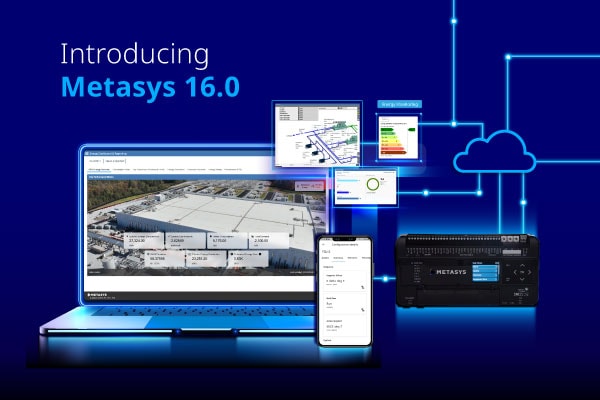
Contact Johnson Controls to request a Metasys 16.0 demo today
Frequently asked questions
What is an intelligent building?
An intelligent building integrates multiple building systems and uses data and automation to improve performance, efficiency, comfort and resilience over time.
Why is interoperability so important in smart buildings?
Most buildings rely on systems from multiple vendors and generations. Interoperability allows those systems to communicate, enabling better insights and long-term flexibility.
How do intelligent buildings address workforce challenges?
With a higher percentage of the workforce heading into retirement, building automation systems simplify workflows, upgrades and daily operations, reducing demand on specialized labor and supporting hanging workforce needs.