
















.jpg?la=en&h=320&w=720&hash=244C75B74F0F77521D56164450973BCD)










.jpg?la=en&h=310&w=720&hash=8D9823F26AA80B2B75C3E4B2E61770DC)


.jpg?la=en&h=320&w=719&hash=13CA7E4AA3E453809B6726B561F2F4DD)
.jpg?la=en&h=306&w=720&hash=F21A7CD3C49EFBF4D41F00691D09AEAC)

.png?la=en&h=320&w=720&hash=18CFCCD916C92D922F600511FABD775D)








- Johnson Controls
- Events
- Applying ASHRAE Guideline 36 in real projects: shaping the future of high-performance buildings
Applying ASHRAE Guideline 36 in real projects: shaping the future of high-performance buildings
As building owners prioritize efficiency, indoor air quality, and system performance, ASHRAE Guideline 36 (G36) has become a cornerstone of modern building automation. Recorded live at AHR 2026, this one-hour session examines how G36 is being implemented in real projects—what’s working, where challenges remain, and why adoption is accelerating. Johnson Controls experts Bernard Clement and Chris Gosline share practical guidance on specifications, commissioning, hardware readiness, and the shift toward standardized, vendor‑agnostic control sequences.
Episode highlights
[2:10] Why does ASHRAE 36 matter now?
Bernard highlights the industry’s rapid adoption of G36 and the energy savings realized—also described in his article, “The Top 5 Benefits of ASHRAE 36.” After briefly answering application questions from the previous session, he discusses the true importance of G36: creating a common language for designers, control contractors and commissioning teams. Ensuring that everyone is following the same playbook reduces rework and misalignment. Adoption is not yet universal, however, due to unclear specifications, variability in equipment, and bid confusion.
[6:23] How should ASHRAE Guideline 36 be specified?
Bernard summarizes the three ways to specify G36 during the bid process—flat spec, cut and paste, and by section number—recommending the latter for success. He then steps through a sample spec for the fan section of an air handling unit.
[9:16] How can canned applications simplify G36 programming?
Moving on to project execution, Bernard shows how canned applications address G36 challenges such as complex, data-intensive control logic; variability in implementation; and the burdens of commissioning and validation. He demonstrates G36 programming for a VAV application, illustrating how canned applications save time and effort. At 16:34, he describes the positive impact of third-party verification, noting the efforts of the California Energy Commission to ensure manufacturers align on consistent, compliant implementations.
[18:25] What needs to be updated to run G36?
Legacy BAS infrastructure affects G36 readiness. Bernard explains that you can’t run G36 on outdated controllers or without VFDs. Modernizing your BAS is essential. He also discusses challenges related to sensor quality and local control loops. Finally, he notes the human factor—the importance of updating education and training for engineers, contractors and customers.
[22:48] How does a modern BAS support G36 and commissioning?
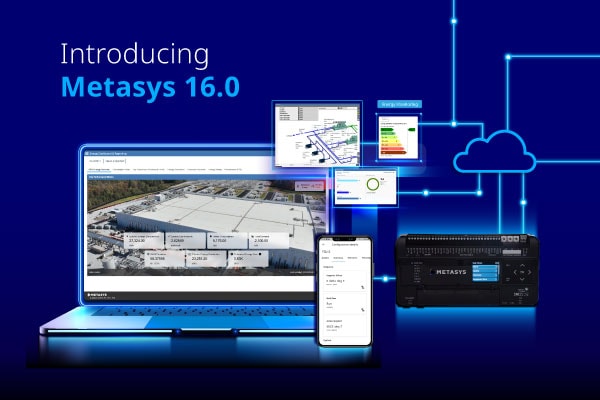
The latest BAS releases feature new tools, such as the Metasys Energy Management suite, that make it easier to track and verify improvements supported when G36 is specified. Bernard also describes how features such as zone group override switches accelerate testing and commissioning.
[25:18] What strategies are recommended for implementing G36?
Before you launch a new construction or retrofit project, Bernard says, it’s smart to invest in training on ASHRAE Guideline 36. Chris Gosline joins the conversation with the clearest, strongest advice from this session: Specify by section to ensure success. Ambiguity kills projects. Chris notes that modernizing your hardware matters, too; taking a holistic approach now will add value and streamline project output. He also says G36 projects need their own project management strategy. The guideline shifts complexity from major equipment to terminal units—requiring different planning and commissioning approaches.
[32:42] How do you manage G36 commissioning challenges?
Chris compares G36 to a zone defense, whereas older approaches resembled one-on-one coverage. With G36, everything is interconnected. If one part fails, the whole system suffers. That symbiotic relationship, Chris says, can make commissioning challenging—as in a project where the VAV boxes were G36-ready but the AHUs weren’t. He says success requires addressing systems rather than equipment.
[34:50] What should you know about G36 retrofits?
Chris once again emphasizes education, for engineers and contractors but also for customers. Education is key to setting clear expectations and conducting realistic hardware assessments for upgrades and retrofits. He says it’s also important to assess your communications network, which affects G36 implementation.
[43:22] Q&A
Bernard and Chris answer questions on how G36 ties to other ASHRAE guidelines; whether you need to upgrade both your BAS and your controllers; tools for consulting engineers; and the future of G36.
Looking for a quick overview of ASHRAE G36? Listen to Bernard for three minutes here.