















.jpg?la=en&h=320&w=720&hash=244C75B74F0F77521D56164450973BCD)














.jpg?la=en&h=310&w=720&hash=8D9823F26AA80B2B75C3E4B2E61770DC)


.jpg?la=en&h=320&w=719&hash=13CA7E4AA3E453809B6726B561F2F4DD)
.jpg?la=en&h=306&w=720&hash=F21A7CD3C49EFBF4D41F00691D09AEAC)

.png?la=en&h=320&w=720&hash=18CFCCD916C92D922F600511FABD775D)








- Johnson Controls
- Building Insights
- Productivity where it really matters: your lecture hall
Productivity where it really matters: your lecture hall
Share


Highlights
- Even with strong teaching, indoor air quality (IAQ) is an invisible factor that can impact focus and energy levels for students in lecture halls
- IAQ improvements are directly linked to higher cognitive performance rising by approximately 1% for every 10% reduction in occupants dissatisfied with indoor air qualityi
- Demand Control Ventilation (DCV) helps match ventilation to real-time space demand, but this alone is not sufficient for reliable IAQ management
- Building Automation Systems (BAS) elevate IAQ management by orchestrating essential components from IAQ sensors to HVAC equipment, enabling consistent learning conditions
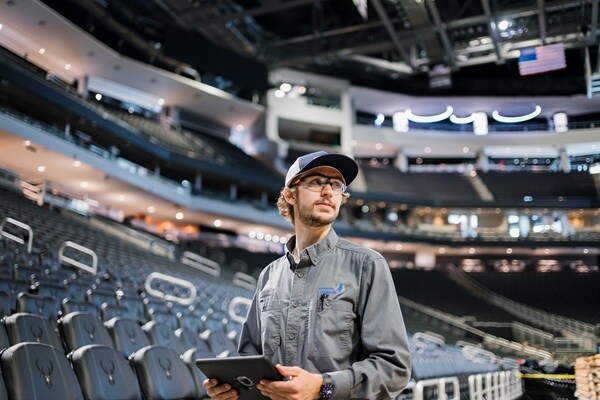
Lecture halls are some of the most important spaces in universities and colleges. They are where ideas are challenged, perspectives broadened, lifelong friendships formed, and the initial sparks of innovation ignited. As central hubs of academic life, lecture halls play an essential role in shaping the learning experience for both students and faculty.
When a lecture hall fills with hundreds of students in minutes, conditions change quickly. Students may notice concentration and energy fading, but it is not always clear why – or that the environment is contributing to it. Growing research continues to link indoor environmental conditions (especially ventilation and air quality) to attention, cognitive performance and productivity. According to a controlled study published in Environmental Health Perspectives, cognitive function scores can be significantly higher under improved indoor environmental conditions compared to conventional building environments.ii
For higher education leaders, this underscores the need to view IAQ as more than a facilities issue. It is an academic enabler that supports student productivity, faculty effectiveness and shaping the next generation of innovators.
Lecture halls: high impact, high variability
Optimizing IAQ in lecture halls can be very challenging from a building operations perspective. Occupancy can quickly swing from empty to full. Between lectures, the hall may sit largelyunused. Traditional ventilation approaches were not designed for this level of variability. In practice, systems often lag behind real conditions or compensate too late.
If ventilation does not keep up, concentration and learning conditions decline. If systems overcompensate, energy costs rise.
An added layer of complexity is the fact that IAQ is not always something occupants can detect easily. This means decline in cognitive performance due to IAQ often goes undetected as occupants may not perceive symptoms or report discomfort.iii
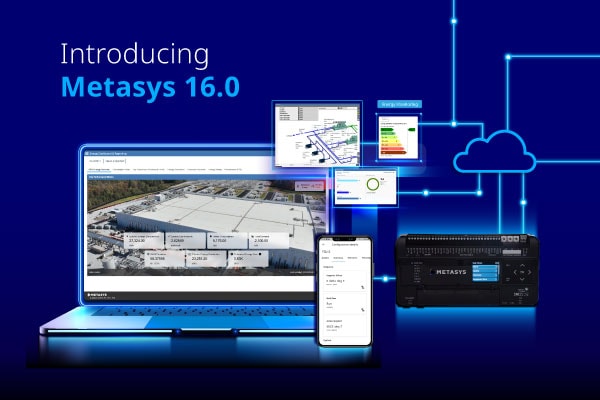
That’s why lecture halls are prime spaces for a smarter approach to ventilation that's tied to occupancy and real demand. This requires real-time occupancy monitoring, predictive analytics and an intelligent building automation system (BAS) – like Johnson Controls Metasys – to create and maintain IAQ where it really matters.
See how Johnson Controls can help operationalize IAQ management for your campus
Turning IAQ intent into operational reality
Many universities already use Demand Control Ventilation (DCV), which is an effective strategy to manage lecture hall variability. It dynamically responds to real-time space demand using data from IAQ sensors, with CO2 levels as a proxy for occupancy. But DCV and sensors alone are not sufficient to truly support learning environments. They improve response, but don’t guarantee conditions will remain within optimal ranges during occupancy changes. Universities and colleges require a platform approach that allows integration and coordination across systems and providers. This is where a building automation system like Metasys provides the foundation that makes strategies like DCV scalable, reliable and repeatable across campus spaces.
Metasys helps universities move from reacting to air quality issues to maintaining consistent conditions as occupancy changes. It’s made possible by connecting IAQ sensors, HVAC equipment and control logic into a single campus-ready platform. This combination creates a shift from reactive ventilation in lecture halls to proactive IAQ management.
As every university facility manager knows, every campus is different due to legacy equipment, multiple vendors and various building types. Ensuring your system can integrate with various components is critical as campuses expand IAQ management capabilities without being locked into a single device ecosystem. Metasys is designed for interoperability with third-party solutions and open standards such as BACnet and a full range of protocols.
Metasys case study: Productivity is in the air
Reliable data drives reliable IAQ
By collecting, validating and visualizing IAQ data in real time, Metasys creates a trusted foundation for action. When combined with DCV and filtration, the system can deliver tighter environmental control, energy-efficient operation and automated control strategies – such as demand-controlled ventilation – that can help create healthier spaces.
Because IAQ optimization relies on consistent and high-quality sensor data, Metasys continuously validates inputs as building conditions and usage patterns evolve. As a result, operators can maintain confidence in every IAQ decision over time.
This confidence is reinforced through an intuitive IAQ dashboard that brings key variables such as CO₂, PM2.5, and TVOCs into a single, transparent view. With clear visibility into performance, campus teams can proactively identify and address issues before they impact occupants instead of reacting after concerns are raised. In doing so, campus operators can actively manage air quality to support productivity, enhance learning outcomes, and foster healthier environments.
Metasys also provides performance verification tools and connected workflows that help facilities teams validate control strategies and sustain trust in system data. Remote analysis further strengthens this approach by identifying performance gaps and operational inefficiencies. This can help uncover opportunities to optimize or modernize systems while improving service and maintenance efficiency.
As campuses grow, Metasys continues to scale efficiently. With support for over 1,000 IP devices communicating directly with the server, it reduces hardware complexity and lowers expansion costs by up to 60% compared to traditional engine-based architectures.
Make IAQ a performance standard
As a keystone member of the International WELL Building Institute (IWBI), Johnson Controls helps universities implement WELL at scale by bringing industry-leading expertise in healthy building standards. With Metasys, higher education institutions can step-change IAQ management capabilities to drive desired outcomes. This provides a foundation for healthier, more consistent learning environments across campus.
See how Johnson Controls can help operationalize IAQ management for your campus
FAQs
Why does indoor air quality really matter in university lecture halls?
It really matters because lecture halls are learning spaces where students and faculty need to stay alert, be engaged and be ready to think. Research continues to link IAQ with cognitive performance. Therefore, optimizing IAQ can impact desired learning outcomes and experiences for both students and faculty.
What IAQ metrics are the most important in universities?
The most important IAQ metrics are CO2, PM 2.5 and TVOCs. Together, these metrics provide a complete picture of indoor conditions. They enable facility managers and other university stakeholders to move from reactive ventilation to proactive IAQ management that supports productivity and learning outcomes.
How does Metasys help keep IAQ performance reliable over time?
IAQ optimization depends on trusted data and consistent execution. Over time, sensors and systems can drift, schedules can change and building usage can evolve. Metasys supports this reality with performance-verification tools and connected workflows that help facilities teams validate operating strategies, sustain confidence in IAQ readings and continuously improve conditions.
____________________________
iLawrence Berkeley National Laboratory, https://iaqscience.lbl.gov/human-performance-topics
iiAllen et al., Environmental Health Perspectives (2016)
iiiLauren et. al., Harvard T.H. Chan School of Public Health (2021)