















































Lanzhou’s first flagship wastewater-source heat pump initiative
Lanzhou faced increasing pressure on its energy system as heating demand grew in the Chengguan District, the city's densely populated commercial center, as conventional heat sources were gradually phased out. To expand heating capacity without adding carbon-intensive infrastructure, Lanzhou Thermal Power Group launched a phased project and explored whether treated wastewater could provide a new source of heat.
Working with Johnson Controls, the Group transformed this underutilized resource into a reliable heating solution. The project was designed in two phases, with Phase I now providing winter heating to approximately 1.5 million m² of residential buildings while supporting Lanzhou's clean-heating and dual-carbon objectives.
Impact Highlights

About 32,000 tonnes of CO₂ emissions avoided each year

Nearly 273,000 GJ of low-grade heat recovered

~37.65 MW of waste heat recovered every hour
Closing Lanzhou's heating gap under growing pressure
Adding complexity, the proposed heat source, reclaimed wastewater, presented its own technical hurdles. Following a detailed on-site assessment of the wastewater treatment plant, Johnson Controls identified several operational constraints. Reclaimed water temperatures averaged only around 10°C, limiting heat-exchange efficiency, while the high salinity and corrosive characteristics of treated wastewater placed exceptional demands on long-term equipment durability. Winter startup conditions added another layer of complexity, requiring the system to operate reliably and stably under low-temperature conditions.
Transforming treated wastewater into a dependable heating resource
In response, Lanzhou Thermal Power Group initiated a phased approach to expand heating capacity without adding carbon-intensive infrastructure. The project was designed in two phases, each planned to serve approximately 1 million square meters, with Phase I centered in Chengguan District to address the most immediate heating needs. Rather than relying on conventional fuels, the Group explored whether treated wastewater could help meet growing heating demand. The city produces approximately 300,000 tonnes of treated wastewater that retains thermal energy from industrial and residential activities.
Working with Johnson Controls, the Group implemented a customized wastewater-source heat pump system centered on five YORK® CYK high-temperature centrifugal heat pump units. The units use ultra-high-pressure-ratio, two-stage compression technology to recover and upgrade low-temperature wastewater heat for use in the district heating network.
To support long-term operation in chloride-rich reclaimed water, evaporator heat-exchange tubes were constructed from corrosion-resistant copper-nickel alloy. The system was designed to address low wastewater temperatures, corrosive water conditions, and the demands of winter operation.
Reliable district heating with measurable environmental benefits
Trial operations began during winter 2024, and Phase I now provides clean and reliable winter heating to approximately 1.5 million m² of residential buildings. By converting previously wasted thermal energy into a productive heating resource, Lanzhou Thermal Power Group expanded heating capacity while advancing Lanzhou's clean-heating and dual-carbon objectives.
Over a single heating season, the system achieved:
- Nearly 273,000 GJ of low-grade heat recovered
- Approximately 37.65 MW of waste heat recovered per hour
- Estimated 9,330 tonnes of standard coal equivalent saved annually
- About 32,000 tonnes of CO₂ emissions avoided each year
The environmental impact is equivalent to planting approximately 1.6 million trees annually. The project also provides residents with a more stable and reliable heating supply while supporting Lanzhou's clean-heating and dual-carbon objectives.
About Lanzhou Thermal Power Group

About the facility
- Lanzhou, Gansu Province, northwestern China
- Developed as a phased district-heating project
- Uses treated wastewater as a heat source for district heating
- Phase I provides heating coverage for approximately 1.5 million m² of residential buildings
Solutions:


Similar stories

Jinan–Zhengzhou High-Speed Railway cuts 2,803 tons of CO2 with winter-ready heating
Five rail stations in the Shandong section cut energy use by 3.27M kWh annually and improved efficiency by 15% using ultra-low temperature heating.
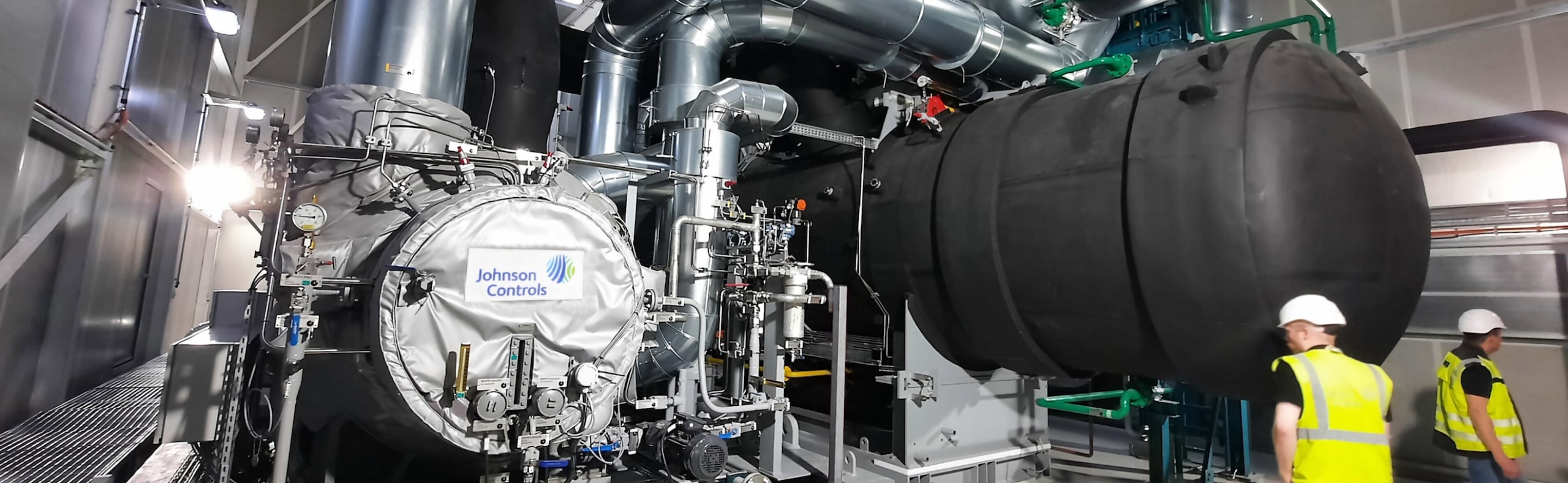
Large scale heat pump powers cleaner heat for Stuttgart
EnBW Stuttgart-Münster uses one of Germany’s largest heat pumps to deliver low‑carbon heat to the regional network and expand district heating capacity in Stuttgart.

Stadtwerke Rosenheim utility cuts CO₂ emissions by 30%
Stadtwerke Rosenheim utility uses Sabroe heat pumps to cut CO₂ emissions by 30% and deliver reliable, sustainable district heating year-round.

Vattenfall enables sustainable district heating in Berlin with heat pumps
Vattenfall expands Berlin heating with Sabroe HeatPAC heat pumps, turning waste heat into hot water.