














.jpg?la=en&h=320&w=720&hash=244C75B74F0F77521D56164450973BCD)











.jpg?la=en&h=310&w=720&hash=8D9823F26AA80B2B75C3E4B2E61770DC)


.jpg?la=en&h=320&w=719&hash=13CA7E4AA3E453809B6726B561F2F4DD)
.jpg?la=en&h=306&w=720&hash=F21A7CD3C49EFBF4D41F00691D09AEAC)

.png?la=en&h=320&w=720&hash=18CFCCD916C92D922F600511FABD775D)










Highlights
- Most commercial buildings already generate the data needed for condition-based maintenance but lack the analytics to turn it into action
- A hybrid model combining condition-based and predictive maintenance often delivers the best results
Many facilities teams still rely on fixed schedules or break-fix maintenance. Condition-based maintenance (CBM) helps organizations move from reactive decision-making to data-driven maintenance based on actual equipment performance.
For facilities teams, this means less guesswork. Instead of servicing equipment that's working properly, you can focus on issues as they arise – before they become costly problems.
The good news is that many buildings already have the foundation in place. A building automation system (BAS) continuously collects data including temperature, pressure and runtime. The opportunity is turning that data into action.
Building analytics can turn raw operating data into actionable insights. This can help facilities teams identify issues, detect performance changes and prioritize maintenance at the right time.
Johnson Controls helps organizations move from building data to maintenance action by connecting BAS data, analytics, maintenance workflows and portfolio-wide visibility within a unified building ecosystem. This connected approach helps facilities teams identify issues earlier, prioritize resources more effectively and make smarter maintenance decisions across their operations.
Read about three building management challenges you shouldn’t ignore
How condition-based maintenance works in commercial buildings
Modern commercial buildings are already generating the data required for condition-based maintenance. A BAS continuously monitors equipment across the premises, including HVAC systems and electrical infrastructure, and that data can be used to inform maintenance decisions.
Building analytics software monitors data in real time, flags conditions when thresholds are exceeded and can send alerts to a CMMS (Computerized Maintenance Management System) to generate work orders.
Here’s how each stage works in practice.
The role of sensors and building data
There are lots of data sources that enable condition-based maintenance in commercial buildings. As mentioned, many commercial buildings already generate this data in abundance, but few capitalize on it to drive maintenance decisions. To turn that data into maintenance decisions, facilities teams need analytics tools that can identify meaningful trends and exceptions.
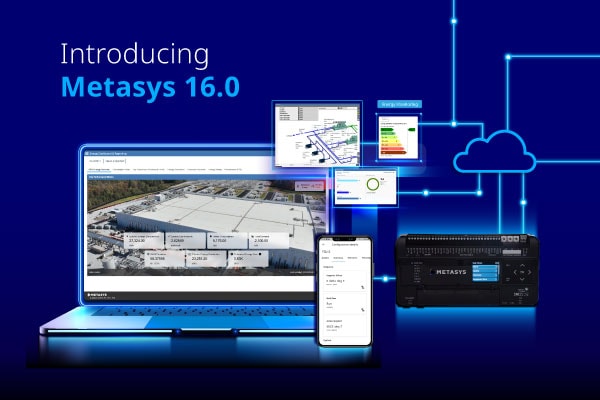
A BAS like Metasys is constantly collecting data across building systems. Its sensor outputs continuously track things like temperature, pressure, flow rates, humidity and runtime hours across systems like HVAC equipment and electrical systems.
These readings help establish baseline operating conditions for each asset and highlight deviations that may indicate emerging issues. For example, facilities with more advanced monitoring capabilities may also use IoT-enabled sensors to track vibration, temperature and other indicators in pumps and motors.
The analytics layer turns this data into insight by spotting patterns, anomalies and inefficiencies that aren't visible in raw data alone. It interprets equipment performance metrics and energy consumption patterns to indicate when a system is working harder than it should, which means something isn’t right.
A chiller consuming more power than usual, for example, points to an issue such as fouling or refrigerant loss well before performance noticeably drops.
Common CBM monitoring techniques in buildings
Once data is collected, analytics tools can identify performance degradation and early indicators of potential faults before they lead to failure. Performance trending uses BAS data (temperature, pressure, flow rates and runtime hours) and watches for drift over time. If a chiller’s temperature is creeping up over several weeks, performance trending will spot it.
Fault detection and diagnostic (FDD) tools take it one step further. They’re programmed to watch for specific faults across equipment and use rules or algorithms to interpret BAS data. For example, if chiller staging occurs earlier or more frequently than expected, it may indicate declining efficiency, control issues or reduced cooling performance.
In terms of adopting condition-based monitoring, these two techniques are the lowest-hanging fruit because they don’t require any additional hardware – only the analytics layer.
Teams with more advanced sensor infrastructure, such as IoT-enabled sensors, will be able to use vibration analysis (which monitors rotating equipment, such as pumps and fans, for the slightest changes) and electrical monitoring (which observes changes in current).
From data to action: triggering the right response
When an abnormal condition is detected, analytics software helps identify the likely cause and provides context for investigation. The CMMS receives this information and generates a work order. That includes the exact asset, its location, the potential fault and the data that informed the signal. This means when the technician arrives, they don’t have to start from scratch.
The CMMS will also be able to prioritize work orders by urgency. For example, a chiller that’s showing early signs of drift will not be as critical as one that’s close to failure. When fully integrated, this process can happen automatically, reducing manual effort and improving efficiency.
How CBM fits into the maintenance maturity spectrum
Maintenance programs typically evolve over time, progressing from reactive approaches to more data-driven strategies. Condition-based maintenance sits between preventive and predictive maintenance, offering many of the benefits of advanced maintenance programs without requiring the same level of investment.
Not all commercial facilities will be able to adopt full predictive maintenance. Fortunately, it’s not always necessary. Condition-based maintenance is the most achievable for most facilities teams and a viable upgrade over more basic strategies. Below you’ll find a brief overview of each approach, along with pros and cons.
Reactive maintenance
Reactive maintenance means only dealing with issues as they happen, also known as a “break-fix” approach. It’s a high-risk strategy because emergency repair callouts are expensive, and unexpected downtime grinds operations to a halt.
Preventive maintenance
This is the next level of maintenance and involves servicing equipment on a fixed schedule. The idea is that keeping equipment in good condition can help prevents complete failure.
However, this approach can lead to overservicing equipment that doesn’t need it and missing developing faults between scheduled services. The result still poses a risk of emergency callouts and unexpected downtime.
Condition-based maintenance
Condition-based maintenance uses real-time equipment data to trigger maintenance activities when specific operating thresholds are reached. Because maintenance is based on actual asset conditions rather than a calendar schedule, facilities teams can focus attention where it is needed most. It’s the maintenance stage that most commercial facilities teams can realistically reach without huge financial investment and effort.
Predictive maintenance
Predictive maintenance takes things one step further by using historical data and patterns (often combined with machine learning) to predict when an issue might occur – before any threshold is reached. It requires significant investment in technology and infrastructure to work effectively, but it’s not necessary for all equipment to be on this approach.
A combination of condition-based and predictive maintenance is the sweet spot for most commercial buildings. Many facilities choose to introduce condition-based maintenance, with predictive capabilities layered on top for any assets that justify the extra investment.
| Reactive maintenance | Preventive maintenance | Condition-based maintenance | Predictive maintenance | |
|---|---|---|---|---|
| How it works | Equipment is repaired only after it fails | Equipment is serviced on a fixed schedule, regardless of condition | Real-time sensor data prompts maintenance once a set threshold is met | Historical data and patterns forecast when an issue might occur. Some also incorporate machine learning capabilities. |
| Prompted by | Failure or breakdown | Calendar or usage | Threshold breach | Forecasted failure risk |
| Pros | No upfront investment | More structured than reactive and reduces the risk of failure | This approach is driven by condition rather than guesswork and is achievable by most facilities without major investment. It can be combined with predictive strategies. | Anticipates failures and maximizes equipment uptime. This approach can be combined with condition-based maintenance and used strategically for high-value equipment. |
| Cons | High risk of expensive emergency callouts and unplanned downtime | Overservicing healthy equipment and missing faults between scheduled visits. Emergency callouts are still possible. | This approach requires thresholds to be established and a workflow to act on alerts | It requires significant investment in technology and infrastructure |
Discover how to move beyond reactive maintenance
Where CBM delivers the most value in commercial facilities
Not every asset requires the same level of maintenance attention. Condition-based maintenance delivers the greatest value when applied to equipment whose failure would create operational, financial or compliance risks.
It’s important to identify which assets could benefit from condition-based maintenance early in the implementation process and then rank them by priority.
Critical and mission-critical environments
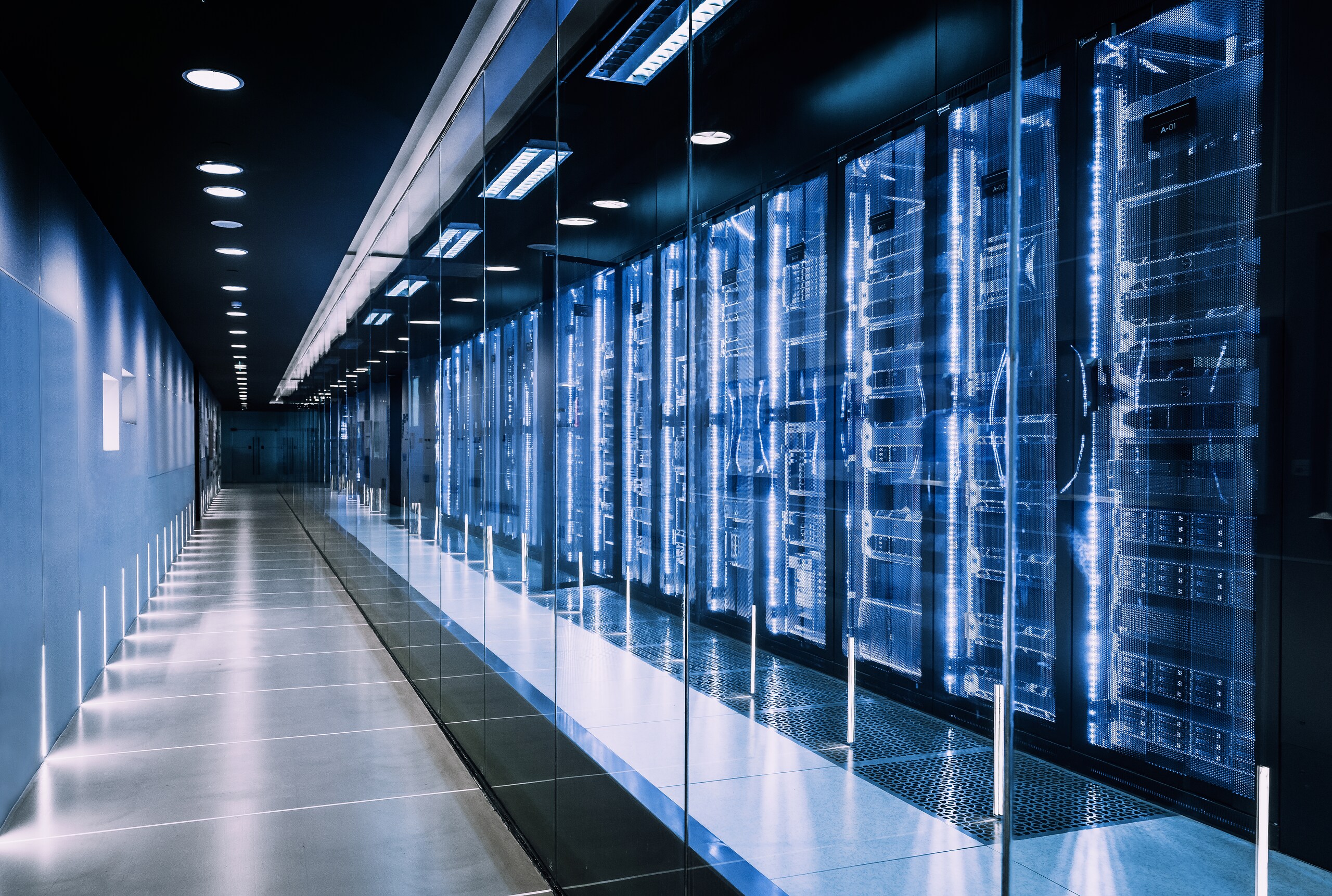
In environments such as healthcare facilities and data centers, the consequences of unexpected downtime can be severe. It can affect patient care, critical operations or data availability. It’s clear that reactive or preventive maintenance carries too high a risk in these spaces, and condition-based maintenance is much more effective.
Importantly, for life safety systems, condition-based maintenance does not replace mandatory regulatory inspections. These are compliance requirements, rather than maintenance, and cannot be skipped.
HVAC equipment, chillers and mechanical systems
HVAC maintenance should be a key priority for facilities teams. One study reveals that space and water heating together consume around half of building energy globally, so switching to condition-based maintenance is well worth the investment.
HVAC and mechanical systems – including chillers, air handlers and pumps – run continuously and are among the heaviest energy consumers in a commercial building. When they start to decline undetected, the consequences can be expensive. Crucially, they often show clear early warning signs before failure, making them well-suited to condition-based monitoring.
For chiller systems, which can account for up to 40% of a building's total energy costs, connecting BAS condition data to an analytics platform has been shown to significantly reduce downtime and lower energy costs.
Multi-site and portfolio environments
Condition-based maintenance provides a consistent data-driven approach across sites. The alternative relies on calendar-based or reactive maintenance. For a multi-site portfolio, this carries huge risk. When paired with centralized building analytics, condition-based maintenance can provide visibility across multiple facilities, helping teams prioritize work, standardize maintenance practices and allocate resources more effectively.
Learn how organizations are adjusting to a new era of performance-driven operations
Getting started with condition-based maintenance
Adopting condition-based maintenance isn’t a major system overhaul that requires expensive additional hardware. Often, it’s purely a matter of using existing building data to guide maintenance. Here’s where to start.
Start with asset criticality
It’s not realistic to switch every asset over to condition-based monitoring at the same time, so begin with a phased approach. This means prioritizing where it will have the greatest impact on your organization.
HVAC and mechanical systems are the most logical places to start. These systems run continuously and consume the most energy in a building. They also show clear signals when they start to decline, such as temperature drift.
When assessing the importance of each asset, it’s worth considering factors like the impact of unexpected failure and whether an asset would show clear signs of decline. Both of these matter when it comes to condition-based maintenance.
Assess what data you already have
Most facilities teams already have much of the data they need to transition to a condition-based approach; the issue is they’re not yet using it for maintenance.
Before investing in new technology, audit what you already have in order to find out which assets have sufficient data and where any gaps exist – that includes BAS outputs, sensor coverage and maintenance records. Chances are you’re closer to condition-based maintenance than you think.
Connect the data to action
Once you’ve set up your technology, it’s time to organize the workflow to support condition-based maintenance. This is a crucial step – otherwise, alerts won’t end up going anywhere. This is a big job, but it only needs to be done once.
First, establish threshold alerts. This involves defining what “normal” looks like (historical data and maintenance records will help here) and setting trigger points for when an alert is raised. This will differ for each piece of equipment.
Escalation protocols are next on the list. This is where you set priorities, both in terms of asset importance and the severity of the issue. For example, a pump drawing slightly more current than usual warrants a routine inspection, whereas one that shows a drastic spike in current draw may signal the motor is at risk of burning out and require immediate escalation.
Finally, make sure the alert translates into maintenance action by generating a work order. Depending on an organization’s readiness, this stage can be either automatically managed through a CMMS or manually entered. The CMMS route offers the least friction. Work orders are generated automatically with the relevant data, asset location, and priority already attached – rather than waiting on someone to manually log it.
Making the move to condition-based maintenance
Moving from reactive or schedule-driven maintenance to a condition-based approach is easier than you think. In fact, for most commercial facilities, the data and infrastructure required to make the switch are already in place.
Johnson Controls helps organizations:
- Capture building data through systems such as Metasys
- Turn data into actionable insights through OpenBlue analytics
- Connect insights directly to maintenance workflows and work orders
Speak to a Johnson Controls expert
FAQs
1. What is the difference between CBM and TBM?
The difference between condition-based maintenance (CBM) and time-based maintenance (TBM) is what prompts maintenance action. Time-based maintenance operates according to a fixed calendar schedule with preplanned servicing. Condition-based maintenance is tied to real-time sensor data and is triggered only when needed.
2. What is an example of condition-based maintenance?
Chiller temperature drift is an excellent example of condition-based maintenance. Chillers can account for up to 40% of a commercial building’s energy costs. If degradation is missed, the impact can be costly. As a chiller starts to degrade, it must work much harder to achieve the same cooling output, which requires more energy use.
Condition-based maintenance catches this temperature drift long before anything gets close to failure. BAS is already tracking temperature, so the analytics layer – such as Johnson Controls’ OpenBlue – can detect when readings drift and prompt a maintenance response before the situation gets worse.
3. What is the condition-based maintenance process?
Condition-based maintenance is triggered by specific data signals indicating that a threshold has been reached. Once an anomaly has been recorded, an analytics layer will diagnose the problem and forward it onwards to generate a work order (via a CMMS or manually) for maintenance to be carried out.